
How Music Creates a Meaningful Routine in Adult Life
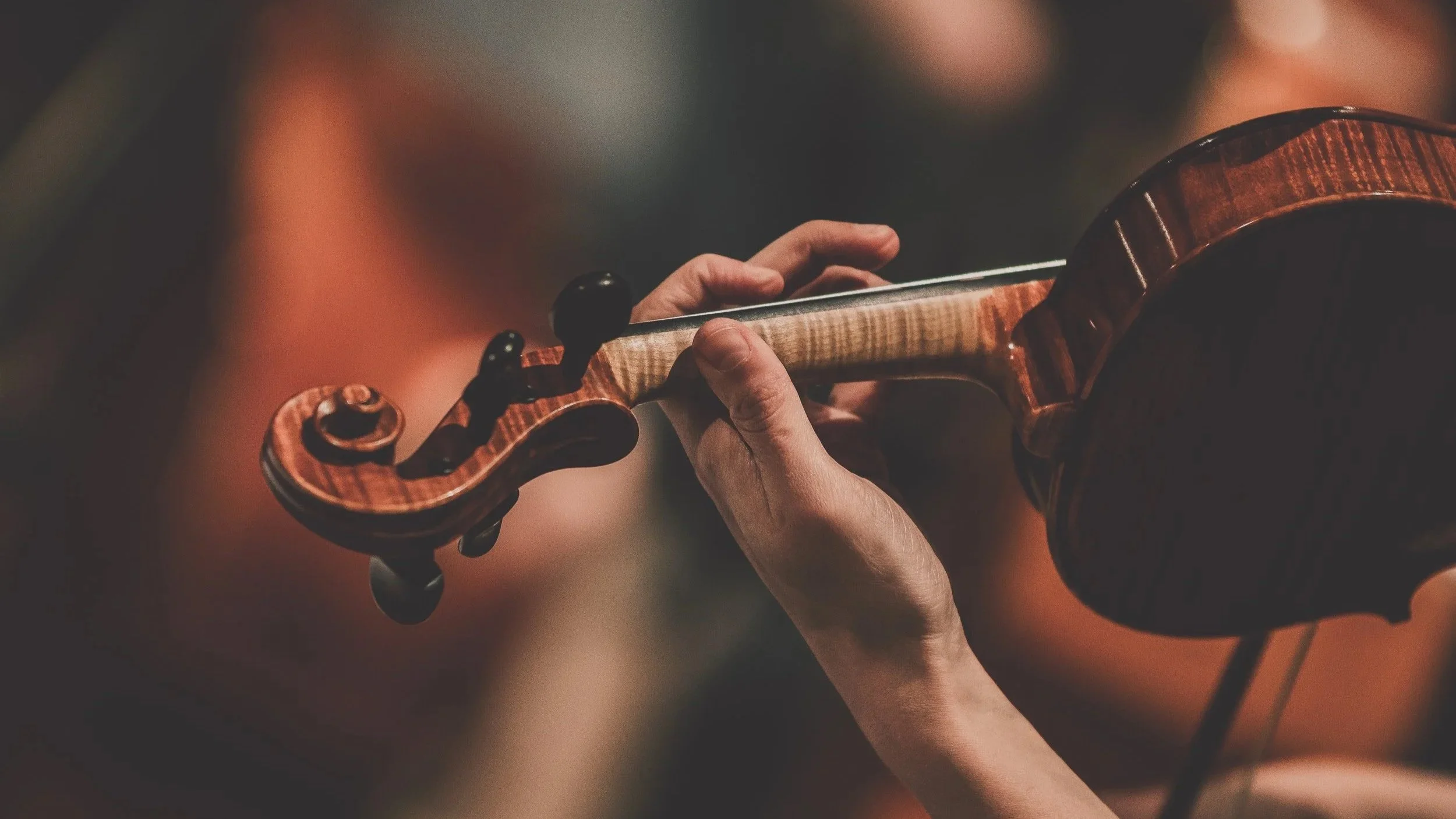
Why playing an instrument gives structure, focus, and connection in a world that moves too fast.
Finding Space in a Busy World
Adult life is full. Sometimes beautifully full, sometimes overwhelmingly full. Between work, messages, responsibilities, and the occasional late-night doom-scroll, it’s surprisingly easy to lose the feeling of doing something that actually matters.
Learning an instrument gives adults something most activities don’t: a small, private world you can step into at any moment. Not an escape, but a place where attention sharpens, thoughts settle, and you feel present again.
For many of my students (and occasionally for me as well…), the violin becomes that world. A place where meaning returns after a day that felt too digital or scattered. Instead of scrolling, you spend ten minutes reading a new movement of a sonata, listening to the resonance of your violin, or noticing small nuances of your bow hand that you hadn't spotted before. It is grounding in the simplest, most elegant way.
Routine That Feels Good (Not Obligatory)
Music creates structure, but gently. It asks for discipline, but never punishes you for a busy week. And unlike so many adult obligations, it gives back more than it takes.
A short daily practice becomes a ritual: a way to bookmark the day with something that matters. The discipline isn’t rigid – it’s meaningful.
Adults often say that practicing gives them:
a routine that feels calming rather than demanding
focus without pressure
progress that is small but deeply satisfying
a sense of building something, slowly and surely
And because the violin rewards attention rather than force, it becomes a place where your mind can rest and your hands can work – a combination that is oddly restorative.
When Solitude Meets Connection
Practicing is often solitary, yes, but music itself is anything but lonely.
In fact, the strongest motivation for many adults is what comes after the solitary moments: the chance to play with someone else.
The spark of chamber music. The joy of duo lessons. (my favourite type!) The thrill of sight-reading evenings. (often accompanied by good food!) … and the surprising warmth of online collaborations.
There is nothing like the moment when two or more players lock into the same sound. It is connection in its most lovely form: no small talk, just shared timing, shared attention, and shared breath. Adults often rediscover a part of themselves here – a social joy that is meaningful, creative, and – human.
A World That Grows With You
Learning an instrument in adulthood isn’t about speed. It’s about depth.
Your sound matures as you do. Your awareness grows with every phrase. Your routine becomes a place where you can think, feel, and breathe differently.
You don’t outgrow music. It grows with you, at your pace, exactly where you are.
And whether you choose to explore Baroque repertoire, modern pieces, or a bit of both, the process stays the same: sound becomes a companion, practice becomes a ritual, and music becomes one of the most meaningful parts of your week.
If you’d like to build a musical routine that feels meaningful, grounding, and genuinely enjoyable, I’d love to support you. We begin with your curiosity, your goals, and the sound already in your hands. My promise: no pressure, no perfectionism – just real progress and a lot of enjoyment.
More threads to follow ・・・
The Musician You Become When No One Is Grading You Anymore │ On what happens when the violin stops being a test and starts becoming part of who you are
Mindful Practice for the Modern Violinist │ Gentle ways to make your practice more aware, less tense, and far more satisfying
What to Expect From Your First Online Violin Lesson With Me │ A clear, relaxed look at your first lesson – no tests, no perfectionism, just music and curiosity