
The Musician You Become When No One Is Grading You Anymore
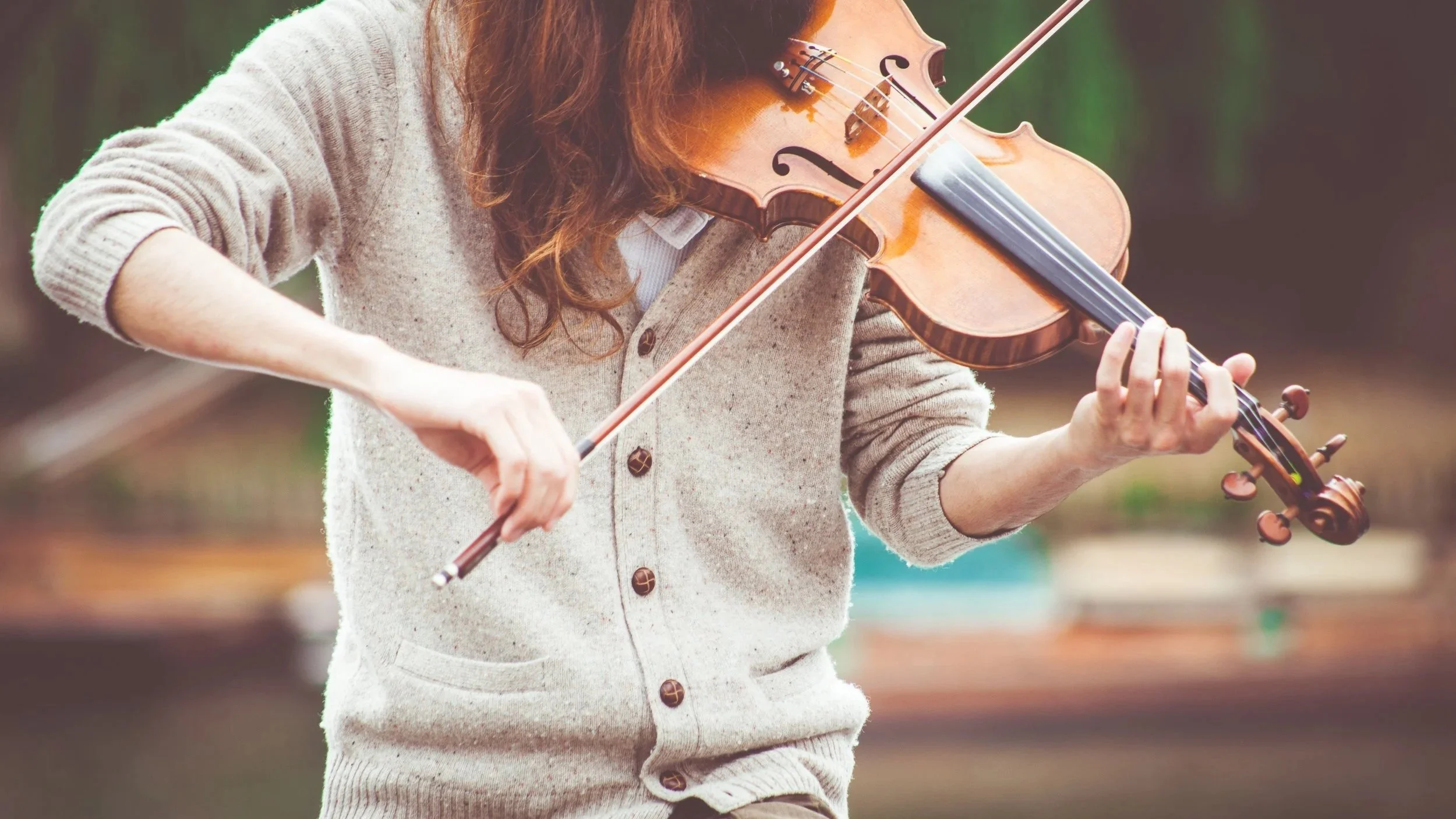
What happens when music becomes yours again – shaped by curiosity, taste, and the kind of freedom adulthood allows.
A Different Kind of Beginning
There is a moment many musicians recognise: the long-awaited realisation that no one is grading you anymore. No jury, no anxious comparison to the nine-year-old prodigy who plays Paganini24 for breakfast.
And with that pressure gone, something unexpectedly lovely happens.
The violin becomes less about proving and more about playing. Adults don’t really start over – they start smarter. With perspective. With intention. And with the unmistakable joy of learning something simply because it matters to you.
When Curiosity Takes Over
One of my favourite things about teaching adults is that curiosity becomes the primary engine of progress. No one is memorising scales for a theoretical exam or rushing through études to please a teacher. Instead, real questions arise:
How does the harmony shape the weight of each note?
What happens if I treat this slur like a spoken gesture rather than a smooth connection?
Would Tartini place a messa di voce here – and why?
How does reading the original manuscript change what I thought this phrase meant?
This is the kind of questioning that creates musicians – not just people trying to survive Kreutzer.
Historically Informed Performance fits beautifully here. HIP is built on curiosity: on investigating sound, context and intention. It rewards the one who likes to think, explore, and connect ideas. And the best part is that the more you learn, the richer the music becomes.
Taste Without Comparison (finally)
When you’re no longer trying to prove anything, taste finally has room to grow.
One can finally develop opinions – not because someone assigned them, but because they begin to hear differently. You notice tone colours you didn’t hear before, you recognise phrasing that feels natural, and you start shaping sound with personal conviction.
Without the pressure of competition, music becomes a mirror rather than a measurement. You discover what moves you, what challenges you, and what kind of musician you genuinely want to be.
Technique That Serves Expression
One of the great misconceptions is that adults learn technique more slowly. In reality, adults learn technique more intelligently.
Because you can listen critically, analyse your motions, and connect sensations with outcomes, your technical improvements become:
more efficient
more confident in choosing musical direction
more skilled at noticing what the sound needs
more able to adjust quickly without overthinking
You don’t just learn how to play – you learn why.
And this is exactly where HIP becomes a gift rather than a specialty. Historical bowing, articulation, and gesture teach you to form sound with clarity rather than force. Modern technique offers security; HIP adds extra shape, nuance, and intention. Together they create a musician who is both grounded and expressive.
The Musician You Grow Into
Perhaps the greatest gift of adult musicianship is this: music becomes part of your identity, not part of your report card.
You practise because it feels good. You improve because you’re paying attention. You play because it brings connection – to yourself, to others, to something larger.
No jury could ever measure that.
If you’re curious what your playing could feel like without pressure – just clarity, expression and good guidance – I’d be happy to show you. We start exactly where you are.
More threads to follow ・・・
Rediscovering the Violin in Adulthood: A Journey of Sound, Sensitivity, and Self │ For when the violin feels like a home you’d like to revisit
How Music Creates a Meaningful Routine in Adult Life │ Turning your violin practice into a calm, anchoring ritual instead of another task on the to-do list
Mindful Practice for the Modern Violinist │ Gentle, practical ways to make your practice more aware, less tense, and far more satisfying