
Mindful Practice for the Modern Violinist
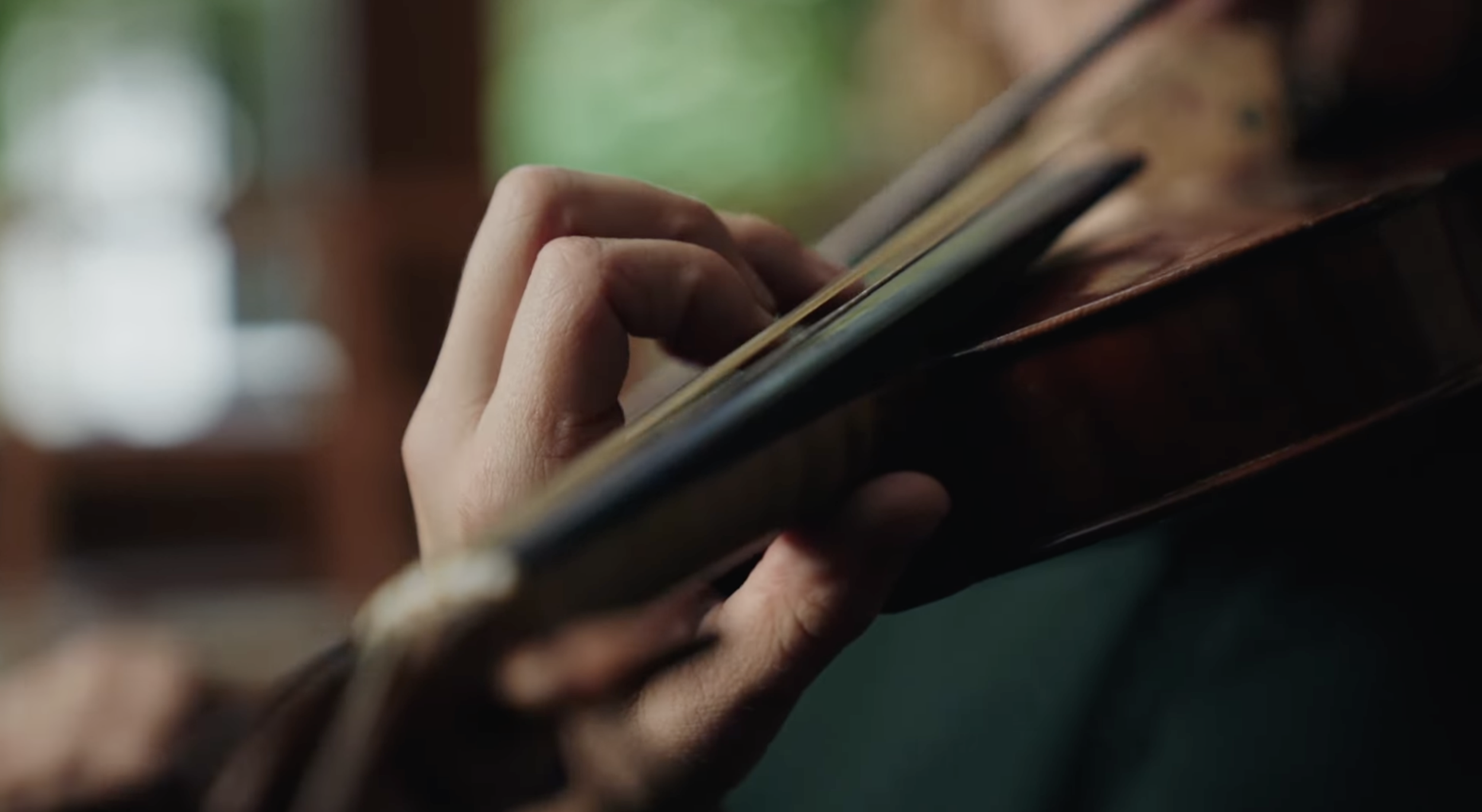
How little can you do… and still improve?
Practising with Awareness
Let’s be honest: most of us have, at some point, practised like we were negotiating with our instrument – a little push, a promise (“just one more run-through”), and the quiet hope that it will sound better tomorrow.
But progress rarely comes from force. It begins when we truly listen – to the sound, the bow, and the person behind both. Mindful practice for violinists isn’t about slowing down; but becoming awake to what’s happening.
And conveniently, that awareness lies at the very heart of Historically Informed Performance (HIP).
Listening Instead of Fixing
When something doesn’t work, the instinct is to fix it immediately: shift faster, press harder, adjust the bow – panic a little.
But before you go to battle, pause and listen. What’s actually happening? What is the sound trying to tell you?
Half the time, the problem isn’t technique – it’s attention. Once you start noticing what’s truly there (and not what you expect to hear), your playing becomes less about correction and more about understanding. That’s where practice starts to feel purposeful again.
The Sound of Breathing
Baroque musicians often described music as a kind of speech – full of rhythm, punctuation, and breath. They were talking about mindfulness long before the word existed.
Try this: take one easy breath before a phrase. Let the bow move with it, and notice what changes. You may find that the sound opens naturally – less controlled, more alive.
And if that sounds too poetic, think of it as a small technical secret: one that improves tone, phrasing, and your day – all at once.
Small Adjustments, Big Awareness
Mindful practice isn’t about turning into a philosopher with a metronome. It’s about paying attention to the moments we usually skip over: how does the bow land? How does the note end? What happens between your intention and the sound itself?
If you’ve ever played on gut strings or tuned to A = 415, you already know how every small detail – humidity, touch, breath – transforms the violin. The same awareness can make your modern violin sound more resonant, expressive, and responsive.
Because awareness, not equipment, is what truly changes your sound.
History Had a Point
Geminiani, Leopold Mozart, or Tartini – every one of them warned against mechanical playing. They urged musicians to play with understanding, with taste, with meaning.
Their treatises weren’t moral sermons; they were reminders that technique without thought is just noise. What they really taught – and what we still need today – is presence: the ability to notice, to react, and to mean what you play.
From Practice to Presence
The beauty of this approach is its simplicity. You don’t need enlightenment, only curiosity. Before you try to fix something, just notice it.
The result? More sound with less strain. More confidence with less overthinking. And a practice routine that feels more like exploration than endurance.
You may even find that the violin, once it feels truly listened to, begins to cooperate.
If your practice routine sometimes feels like a loop on repeat, it might be time to listen differently. In my online violin lessons for adult and modern violinists, we explore how awareness – the kind that musicians once called “taste” – can turn daily practice into something clear, expressive, and genuinely satisfying.
More threads to follow ・・・
Inside the Studio – How I Teach, Think, and Listen │ A longer look at how I think about sound, context, and learning in this studio
What to Expect From Your First Online Violin Lesson With Me │ For when you want to know how that very first session actually feels
Starting Your Historically Informed Journey – Without a Baroque Setup │ Practical, non-dogmatic first steps if mindful practice is making you curious about HIP
☯︎
© 2026 Léna Ruisz. Text and images may not be reproduced without permission.