
Why Historical Violinists Tune to A=415 (and Why You Should Try It)
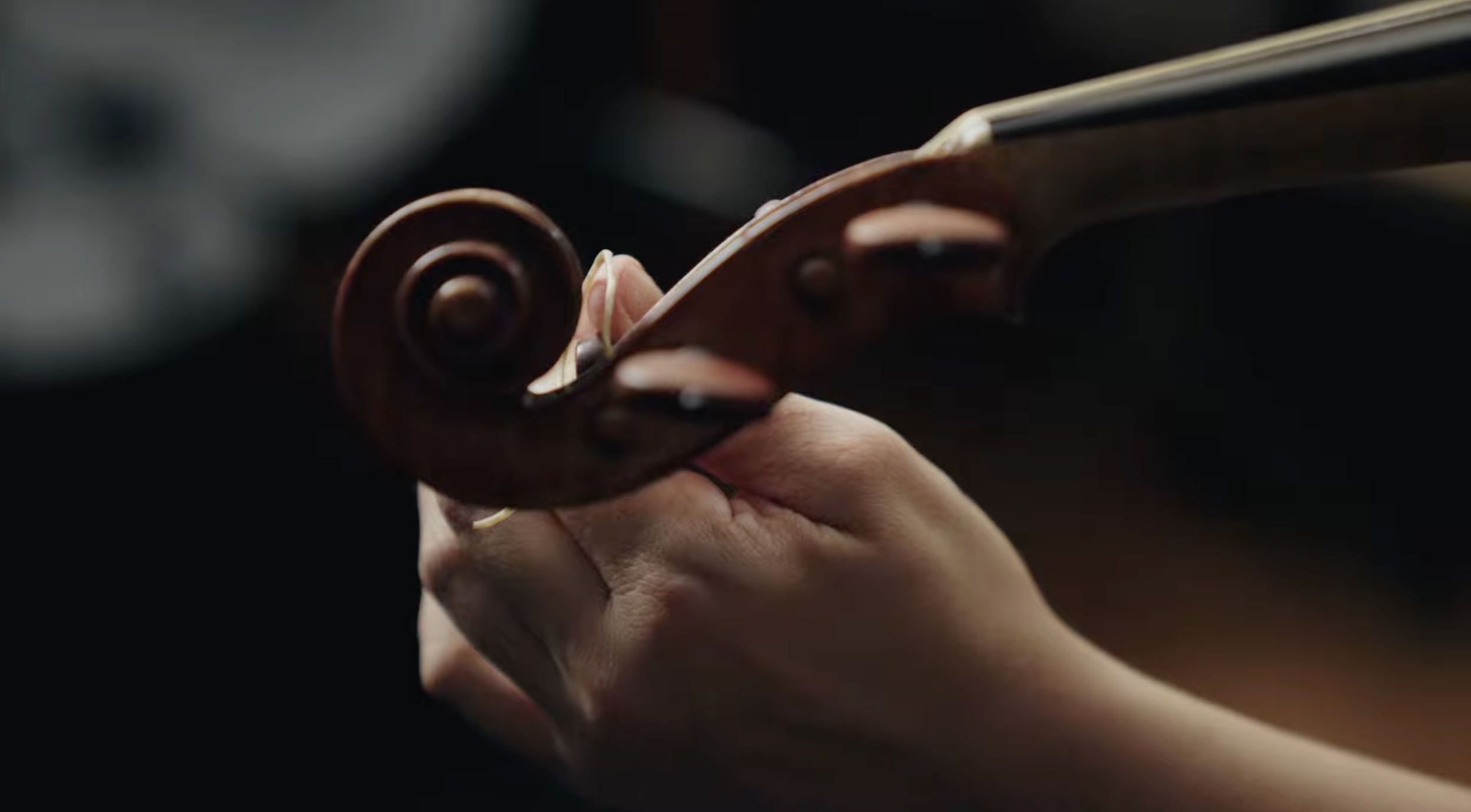
What if the fastest way to change your sound isn’t practice… but 25 Hz?
A Different Kind of Resonance
Most violinists today begin at A = 440 Hz. It’s the pitch our tuners default to, the standard of orchestras worldwide. But in earlier centuries, pitch was fluid – it shifted with geography, repertoire, and occasion.
Among the many historical standards, A = 415 (roughly a semitone below modern pitch) has become the modern reference for Baroque and early Classical music in Historically Informed Performance (HIP).
It’s not a rule, but an invitation: a way to step into the sound world of Bach, Handel, or Vivaldi, and to feel how differently the violin responds when it breathes at this tension.
The Feel of Sound at 415
Tuning to A = 415 immediately changes the violin’s resonance. The strings hold slightly less tension, the instrument vibrates more freely, and the sound becomes warmer, darker, and more spacious.
Bow response often feels more pliant; phrasing can settle into a calmer, speech-like flow. Many players describe it as a relief – the violin seems to exhale, and so do they.
Articulation gains clarity, tone colours multiply, and the player’s focus shifts gently from sheer projection toward nuance and expression.
For adult learners, this can be a moment of rediscovery – sound begins to flow rather than fight.
For professionals, it can refine awareness: how a small physical change alters the emotional weight of a phrase.
A Journey Through Pitch
In Bach’s time, there was no universal pitch. Each region – sometimes each institution – maintained its own standard. What we now call “Baroque pitch” is a modern average reconstructed from historical evidence.
In German-speaking areas, chamber music often centred near A ≈ 415 (Kammerton), while church organs sat higher around A ≈ 465 (Chorton).
France favoured a lower A = 392.
Parts of Italy often used brighter levels around A ≈ 460–466.
As the Classical era unfolded, practices converged toward A ≈ 430, then A = 435, and eventually to today’s A = 440.
When we tune lower, we aren’t stepping backward – we’re stepping into this varied historical landscape and hearing the instrument in a way that earlier musicians would recognise.
What Happens Physically
Lowering pitch by about a semitone reduces string tension by roughly 5–6%, depending on setup. That modest change has tangible consequences:
The body of the violin can couple with the strings more freely, increasing a sense of openness in the sound.
The spectrum tends to feel warmer and less brilliant, with overtones blending a touch more seamlessly.
The onset of the note often feels easier to shape at softer dynamics, so gentle attacks and releases become more natural.
To the ear, this yields greater depth and a sense of space around the tone. It’s not louder – it’s more alive.
Historical Voices on Pitch
Historical sources make clear that pitch was shaped by local standards and practical constraints: organs, court preferences, available instruments, and regional habits. Players adapted by transposing, using different instruments, or aligning to the resident pitch. It wasn’t a free, mood-based choice; it was a context-based practice that still left room for artistry within those boundaries.
That perspective is valuable today: understanding the context behind a pitch level helps us form interpretations that listen to history while speaking clearly in the present.
Why You Might Fall in Love with It
Spend a few days tuned to A = 415 and notice how your playing adjusts.
Your bow arm relaxes, phrasing breathes differently, and vibrato becomes a choice rather than a reflex. Many describe it as meeting an old friend for the first time – familiar, yet newly expressive.
You don’t need a Baroque instrument to explore this. Even on a modern violin, the shift can awaken sensitivity to colour, timing, and shape. It’s an exercise in listening – and in re-imagining what “in tune” can mean.
A Contemporary Perspective
Tuning to A = 415 isn’t about abandoning modern practice; it’s about expanding awareness. For some, it brings a new sensitivity to the instrument’s natural voice. For others, it becomes a bridge between modern technique and historical understanding – a way of joining the past not by imitation, but through sound itself.
A = 415 is the rare setting that makes both the violin and the player exhale. If you’d like help finding the sweet spot, not just the pitch, I teach online sessions that make historical ideas practical on whatever setup you currently call home.
• • • More threads to follow
The Baroque Bow: An (Old) New Way to Shape Sound │ What changes in phrasing and articulation when the bow itself “speaks.”
The Beauty of Gut Strings: Warmth and Expression in Sound │ Why lower tension becomes a whole new colour palette.
The Art of Adjustment – First Steps Toward a Historically Informed Setup │ Small setup shifts that make 415 feel even more natural.
☯︎