
Rediscovering the Violin in Adulthood: A Journey of Sound, Sensitivity, and Self
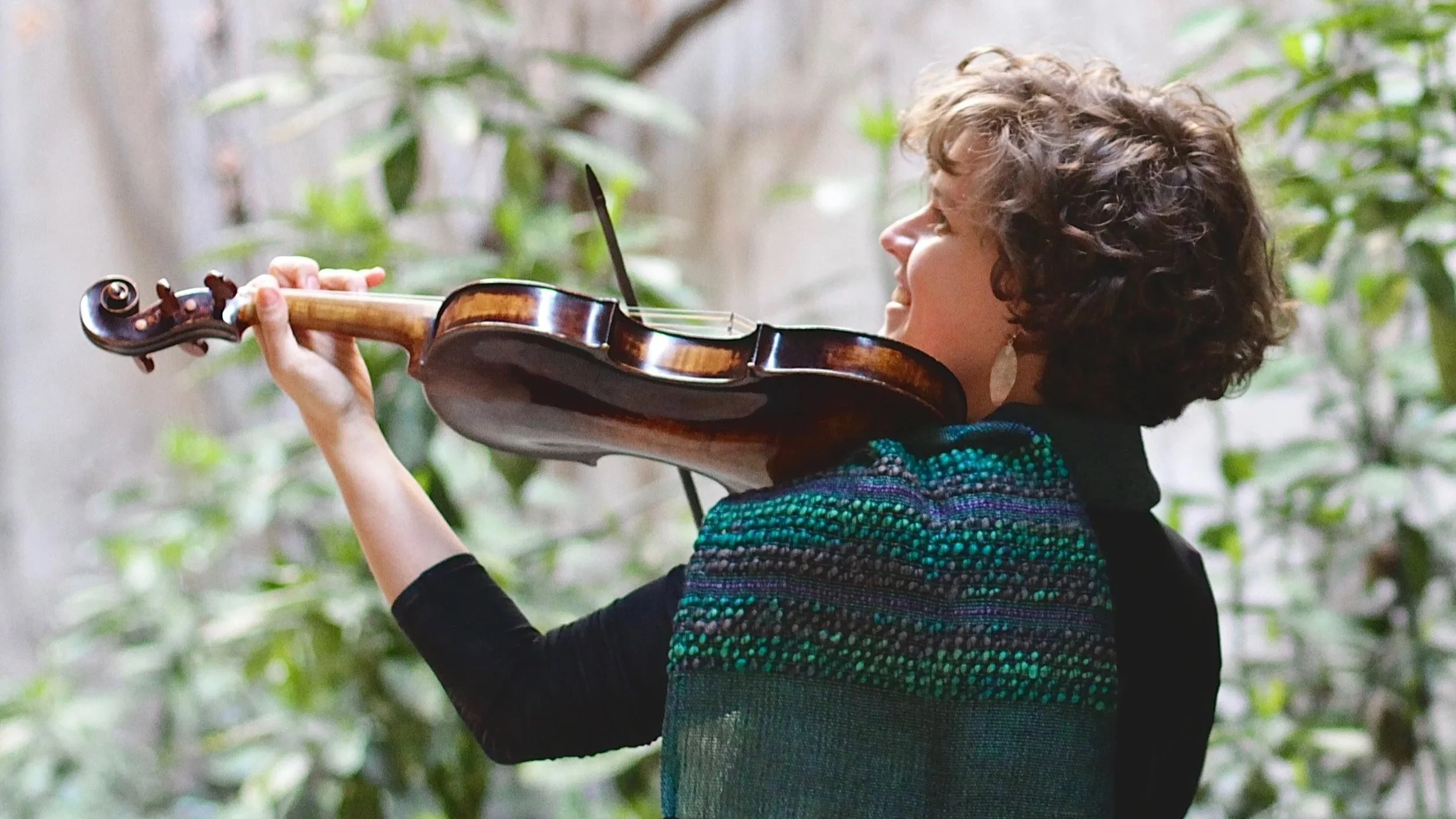
Can the violin become a place…to come home to?
Beginning Again
Many adults find their way back to the violin – some after decades, others for the first time. What they share is curiosity: the sense that it’s never too late to learn something beautifully complex.
The Historically Informed Performance (HIP) approach offers a remarkably natural way into that process. It invites you to listen, to notice, to react.
It’s less about perfection and more about presence – about understanding sound as language and playing as conversation.
The Gift of Perspective
Adults bring something to music that’s impossible to fake: experience.
You’ve listened, lived, and learned how much difference a single detail can make – in life and in phrasing.
When you return to the violin, you’re not starting over; you’re refining perception.
Each note becomes an observation, each phrase a dialogue between instinct and awareness – between what you knowand what you’re learning to hear again.
HIP fits that perfectly.
It values responsiveness over repetition, reflection over routine.
It’s not just how you move your hands, but how you direct your attention – and how that awareness shapes sound.
A Gentle Way In: The Historically Informed Approach
Historically Informed Performance isn’t a secret society for people with gut strings – it’s a way of thinking.
It asks: how did 17th- and 18th-century musicians imagine sound, and what can that teach us now?
When you look at Francesco Geminiani’s The Art of Playing on the Violin (1751), Leopold Mozart’s Versuch einer gründlichen Violinschule (1756), or Giuseppe Tartini’s Trattato di musica secondo la vera scienza dell’armonia (1754), you find teachers who wrote deeply about character, rhetoric, and motion — not just notes.
They described sound as persuasion, bowing as speech, and phrasing as storytelling.
Seen through that lens, even a modern violin setup becomes a bridge between past and present.
HIP doesn’t replace modern technique; it refines it – giving structure to imagination and historical depth to expression.
Time as an Ally
Children absorb fast; adults learn on purpose.
With maturity comes patience, curiosity, and the ability to connect details others might miss.
You know progress isn’t always linear – sometimes it spirals, circles, reflects.
Historically Informed Practice speaks that same language.
It encourages you to slow down, listen, and experiment with what sound can do.
You start to notice what happens when you let go a little: the shape of a release, the breath in a phrase, the balance between control and trust.
Progress feels slower, but it sticks – because it’s grounded in understanding, not muscle memory.
Finding Your Voice Again
Many of my adult students describe this process as rediscovering something they didn’t know they’d lost – the pleasure of sound itself.
The violin responds to this mindset: it stops demanding and starts conversing.
You don’t need to be a conservatoire graduate to explore this world.
You just need curiosity, and perhaps a willingness to rethink what “good sound” really means.
The violin doesn’t care when you start – it only cares how you listen.
If you’d like to explore how historical awareness can refine your sound and deepen your musicianship, I offer online violin lessons tailored for adult learners and professionals ready to make music that both thinks and feels.
More threads to follow ・・・
Inside the Studio – How I Teach, Think, and Listen │ A fuller look at how I think about sound, history, and learning in this studio
What to Expect From Your First Online Violin Lesson With Me │ A calm, practical guide to what actually happens in your first session back
Starting Your Historically Informed Journey – Without a Baroque Setup │ Gentle first steps into HIP using the violin you already have
☯︎
© 2026 Léna Ruisz. Text and images may not be reproduced without permission.