
Bringing HIP Awareness to Modern Violin Playing
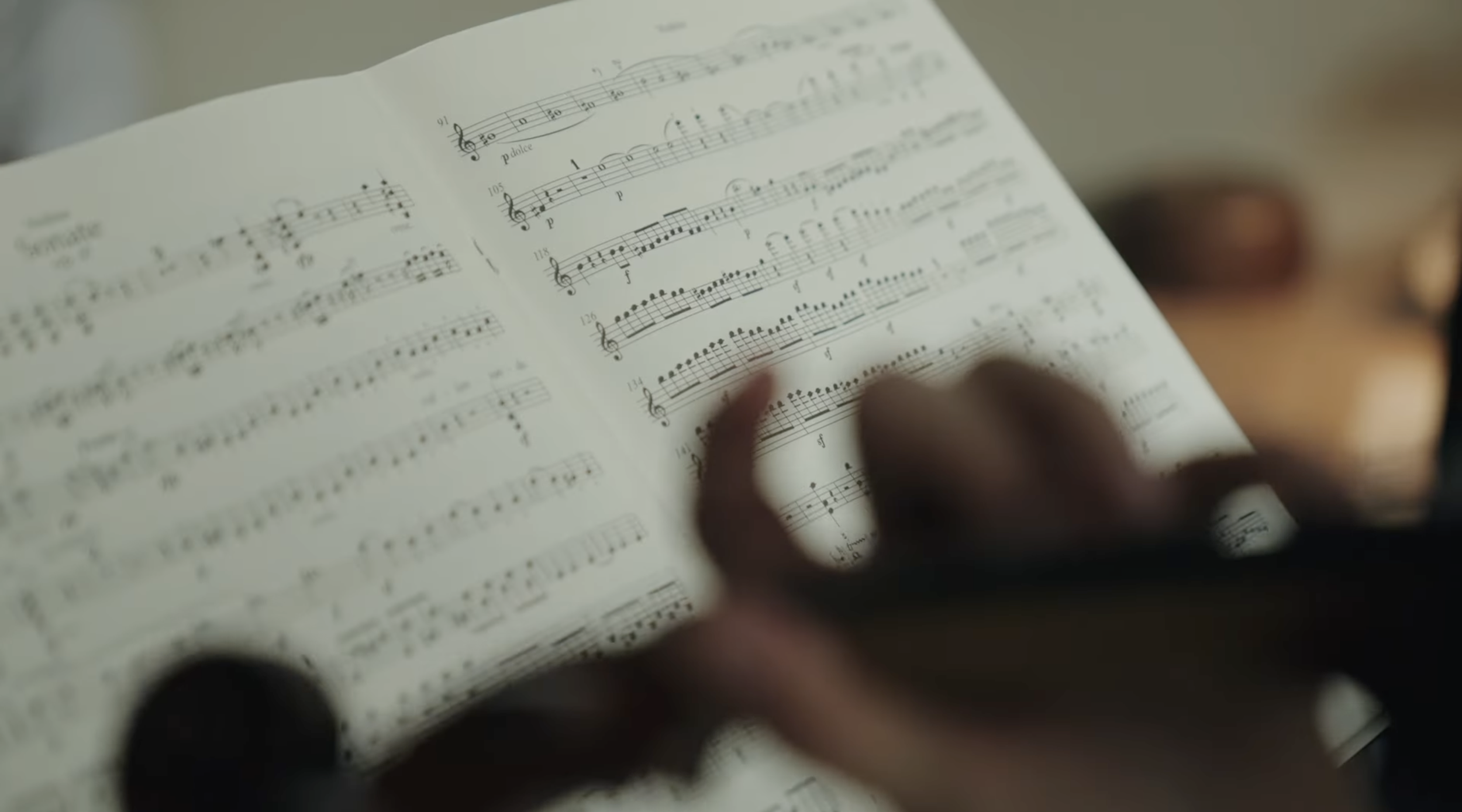
Are you playing notes… or shaping a sentence?
Understanding What HIP Can Offer Modern Players
The worlds of modern violin playing and Historically Informed Performance (HIP) are often presented as separate planets: steel versus gut, projection versus rhetoric, concert hall versus chamber room. In reality, they share more values than differences.
Both aim for expression, clarity, intention, and meaning. Both ask the same fundamental question: what does this music want to say?
HIP simply offers another lens – a slightly older pair of glasses – that helps you see more clearly how composers once shaped phrases, timing, articulation, and emotion. And when modern violinists add this awareness to their toolbox, something remarkable happens (and I say this from experience!): the playing becomes more personal, more coherent, and often more free.
Why Modern Violinists Are Drawn to Historically Informed Ideas
Many modern violinists discover HIP for very simple reasons:
they want phrases that feel more spoken than sustained
they want bow strokes with character, not uniformity
they want expression rooted in meaning, not habit
they want to understand why some passages feel awkward until you treat them like rhetoric
It is not about switching teams: it is about expanding the vocabulary.
Bringing a HIP perspective to modern playing is similar to learning a second language: you won’t stop speaking your first one. You simply gain new ways of thinking, communicating, and expressing nuance.
And if you ask musicians who move between both worlds, I would say our modern playing becomes clearer, more intentional, and less tense, because style becomes a choice, not a default. I love this two-sided musical life, where each part supports the other.
What HIP Awareness Looks Like in Daily Practice
You do not need gut strings or a Baroque bow to apply HIP concepts. You can start today, on your modern violin, with:
1. Articulation That Speaks
Understanding how 17th- and 18th-century players used consonant-like attacks, bowing shapes, and natural inflection helps you avoid the trap of smooth but neutral sound.
2. Timing That Breathes
Historical phrasing is rarely metronomic. Tiny delays, questions, commas: all these existed long before rubato had a name. When modern players try this consciously, immediacy appears – the music feels more alive.
3. Dynamics With Intention
HIP encourages relief, shading, chiaroscuro, presence, and retreat. These are artistic decisions available to every violinist, regardless of setup.
4. Bowing Based on Function
The modern bow can absolutely phrase rhetorically. Often it only takes a lighter index finger, a gentler beginning, and a bow speed shaped by speech rather than sustain.
Modern and HIP Are Not Opposites – They Are Collaborators
HIP is sometimes treated as the opposite of modern technique, but in real life they tend to be collaborators rather than rivals.
Modern ensembles increasingly adopt phrasing ideas that come from historical practice, not as a “style,” but because these gestures help the music communicate more clearly.
HIP does not diminish your modern playing. It enriches it. Modern playing brings technical security and tonal consistency; HIP brings extra context and colours. Together they create interpretation that is both grounded and imaginative.
Why This Matters for Adult Learners and Professionals
Whether you come from modern training or you are exploring historically informed playing for the first time, a small shift in awareness changes a great deal. Phrasing becomes clearer, articulation gains meaning, and the music feels less forced and more intentional.
Adult learners often describe a new sense of ease and understanding, while professionals appreciate how HIP thinking sharpens detail and supports cleaner musical decisions.
It does not take a full stylistic overhaul, just a few historically aware habits that quietly reshape how you listen, react, and interpret. And once you hear music this way, it tends to stay with you.
If your ear is asking for more nuance and your hands are ready for more ease, we can weave HIP into your playing step by step. No new gear, no dramatic makeover – just clearer ideas, better timing, and a sound that feels more like you.
More threads to follow ・・・
Inside the Studio – How I Teach, Think, and Listen│My longer “behind the scenes” manifesto about sound, history, and teaching.
The Art of Adjustment – First Steps Toward a Historically Informed Setup │ For when you are ready to experiment with gut strings, bows, and small setup changes.
The Beauty of Gut Strings: Warmth and Expression in Sound│When you are ready to fall a little bit in love with your sound again, gut strings show how much warmth, colour, and nuance was hiding in your violin all along.
☯︎
© 2026 Léna Ruisz. Text and images may not be reproduced without permission.