
Inside the Studio – How I Teach, Think, and Listen
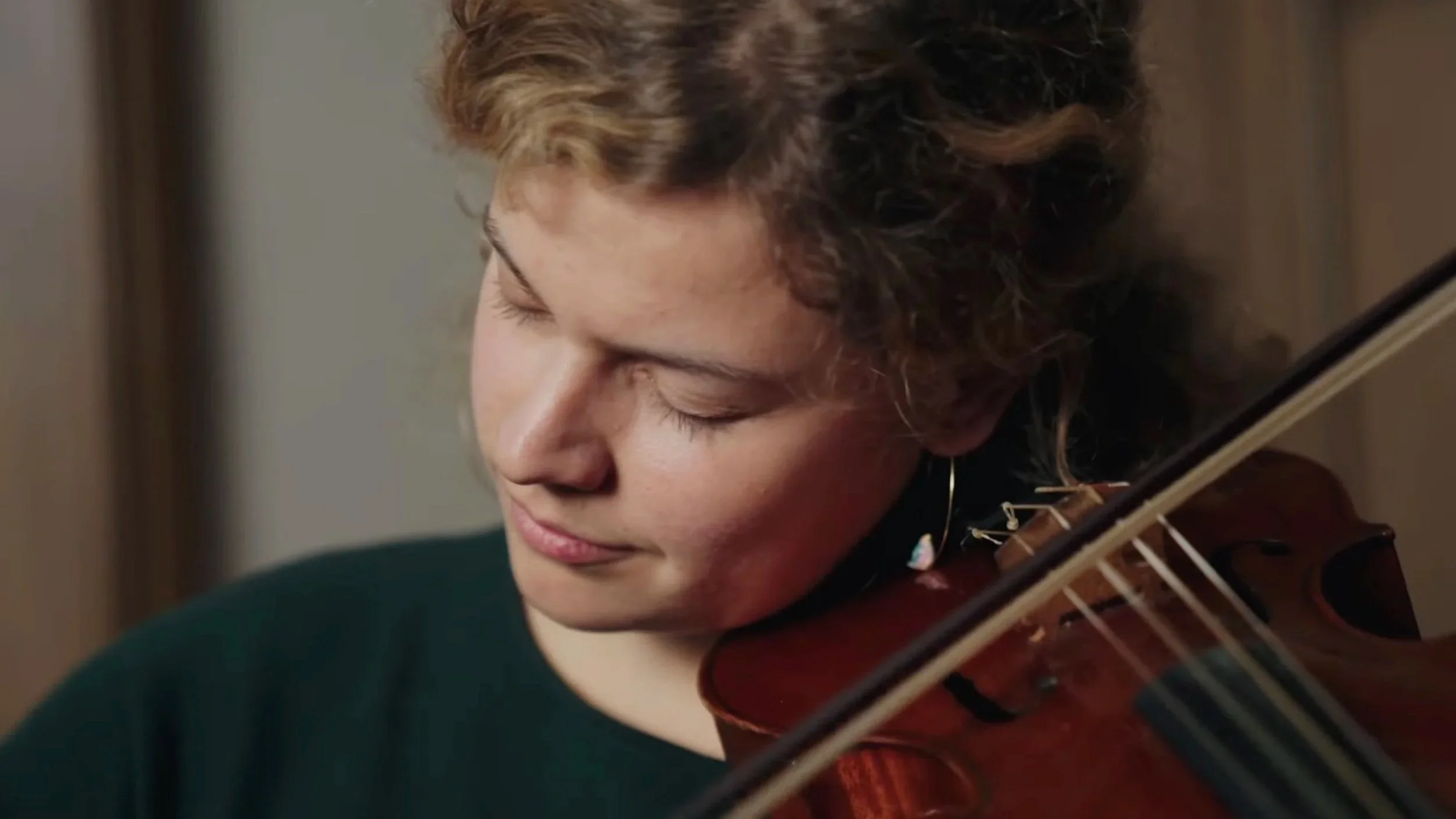
If the homepage is the short answer, this is the full story – why this studio exists and what it’s like to learn here.
This Studio exists because at sixteen I walked into a Baroque course in a castle in the Hungarian forest and realised something quietly explosive:
I do not just want to play the violin.
I want to understand it – in context, in history, in sound, in my own hands.
Up to that point I had a very traditional background: scales, études, strict teachers, all the Russian–Prussian discipline you can imagine. It was solid, and I am deeply grateful for it. But something in me was still hungry – for colour, for explanation, for the freedom to make my own decisions without losing structure.
Historically Informed Performance opened that door. It gave me language for things I had felt instinctively: why certain phrases want to breathe, why some bowings feel like speech and others like gymnastics, why context makes technique easier rather than harder.
If you would like a clearer overview of what I actually mean by Historically Informed Performance, you can also read more about what HIP is and why it still matters today in one of my core articles.
This Studio is where all of that comes together – my work as a performer, my research at the Schola Cantorum Basiliensis, and many years of teaching adults who are curious, thoughtful, and very much not beginners at life.
Who this studio is for
I built this space with a very specific person in mind.
You might recognise yourself in one of these:
You played as a child or student, then life happened, and now you feel the violin is calling you back.
You are a modern professional who keeps bumping into the word “HIP” and suspects there is more to phrasing and style than you were taught.
You are starting later in life and quietly wondering if you are allowed to begin now.
You are intellectually curious and slightly allergic to dogma.
My ideal student is not defined by age or level, but by curiosity.
If you like to think, to ask questions, to connect ideas, then we already share a language.
If you are returning after a long break and want to feel seen in that process, you might enjoy Rediscovering the Violin in Adulthood: A Journey of Sound, Sensitivity, and Self, where I write more about this specific path.
What you probably worry about
Most first messages I receive sound something like:
“I have not played in years, is it too late?”
“I am mostly self taught, is that a problem?”
“I am already a professional, what if you find all the things I do ‘wrong’?”
Underneath all of these is the same question:
Am I good enough to deserve this?
My answer is always the same: this is not an audition.
You do not have to arrive “in shape”.
You do not have to reach a mysterious minimum level before asking for help.
The only requirement is that you show up as you are, with an instrument, a bit of time, and a mind that is willing to explore. The rest is my job.
How it feels to learn here
If you sat invisibly in the corner during a lesson, you would probably see:
a lot of conversation
some very focused listening
occasional laughter
experiments that sometimes work and sometimes need a second try
small technical corrections that grow from musical ideas, not the other way around
I do not teach by tearing anyone down. You will get honest, specific feedback, but never at the cost of your joy or dignity. I am not interested in sarcasm, shaming, or “breaking” a student to rebuild them.
How I want you to feel during and after a lesson:
Curious – you understand more than before, and you want to try it.
Challenged – not overwhelmed, but clearly invited to grow.
Ready to go – you know exactly what to experiment with until we meet again.
Some students need detailed explanation. Others learn best by trying and feeling. Part of my role is to adapt – to find the language, metaphors, and exercises that make sense to your particular brain and body.
What “historically informed” really means here
In my Studio, Historically Informed Performance is not a club, a costume, or a purity test. It is a way of thinking.
In practical terms, that can mean:
looking at what a composer actually wrote in a manuscript or early edition
understanding how bowing and articulation functioned as a kind of speech
reading the bass line, harmony, and context so the phrase starts to make sense from the inside
exploring how gut strings, Baroque bows, or historical pitch change the way the instrument responds
Sometimes this leads very far into the Baroque or Classical world: chin off, A = 415, gut strings, early bows, manuscripts on the stand.
Sometimes it “only” means that you start shaping a Brahms phrase with more rhetorical awareness, or that your Bach on a modern violin suddenly feels more natural because you are thinking in sentences, not in bars.
For modern players who want more nuance without giving up their current setup, I write more about this bridge in Bringing HIP Awareness to Modern Violin Playing.
The important part: HIP is a toolbox, not a religion. We choose what serves your sound and your life.
Your body, your setup, your sound
I care deeply about how you and your instrument coexist.
When you play for me, I look at:
how the violin sits on your body
what your bow arm is actually doing (not just what it intends)
where your breathing is free and where it vanishes
which parts of you are doing far more work than necessary
Sometimes small changes – a slightly different balance point, a lower shoulder, a different concept of where the phrase is going – prevent years of tension.
I do not believe in one “correct” setup for everyone. I play almost entirely chin off myself, but for demanding later repertoire I use a tiny, very low chin rest in the centre of the instrument. For other people, a certain type of shoulder rest might be the difference between playing with ease and not playing at all.
We talk, we experiment, and we design something that is:
sustainable for your body
appropriate for your repertoire
aligned with how historically informed you want to be right now
If you are curious about this topic in detail, I unfold it more fully in Holding the Violin With (Or Without) a Chin Rest.
How we work online
Online lessons are not a second choice here. They are the core of this studio.
You need:
a violin
a laptop or tablet
a reasonably stable internet connection
maybe headphones, and later perhaps a simple microphone
We work together on Zoom – simple and reliable. At the start, we take a few minutes to set up sound and camera together, so you are not alone with the tech side. If the internet misbehaves, we troubleshoot or reschedule. Mildly annoying, yes. A disaster, no.
Online teaching has a few unexpected advantages:
You hear yourself more honestly. You cannot lean only on my ears.
You become more independent in the practice room, because you learn to notice more.
You can record parts of the lesson and watch them again when you forget exactly what your hand did when it suddenly felt easy.
If you want a deeper sense of how this works in practice, you can read Why Online Violin Lessons Work Better Than You Think, where I talk more about progress, focus, and sound through a screen.
Who I am, and what I bring
Elsewhere on this site you will find the formal biography – the festivals, the ensembles, the conservatoires, the scholarships. All of that matters, because it shows I live this life fully as a performer and researcher.
But for this page, what matters most is what all of that experience gives to you:
I have played under, beside, and in front of some of the most inspiring HIP musicians in Europe, and I pass that knowledge on.
I have worked through the lonely parts of practising, the injury scares, the motivation dips, the “am I doing any of this right” moments – and I am very open about them.
I am currently researching motivation and historical pedagogy, which means I think a lot about how people learn, not only what they learn.
I see teaching as a collaboration. I bring my ears, experience, and slightly nerdy love of context. You bring your curiosity, your questions, and your life so far. The lessons happen where those two meet.
What I can and cannot promise
What I can promise:
I will take your playing and your time seriously, whether you are a beginner, a returning adult, or a professional.
I will do everything I can to keep curiosity alive – to give your practice structure and freedom at the same time.
I will be honest and clear, but always on your side.
What I cannot promise:
that this will always feel easy
that there will be no moments of frustration or doubt
that you will wake up playing like your favourite soloist after three lessons
What I can say, from experience, is that if you bring an open mind and a reasonably consistent habit, you will change – in how you hear, how you move, and how you think about music.
If this feels like your place
If something in this page feels like recognition – if you see your own questions here, or feel that small “click” of oh, this is how I want to learn – then you are exactly the kind of person this studio is for.
You can:
Either way, we start where you are now – with your sound, your questions, and your curiosity – and let the rest grow from there, one phrase at a time.
☯︎
© 2026 Léna Ruisz. Text and images may not be reproduced without permission.