
The Beauty of Gut Strings: Warmth and Expression in Sound
Last reviewed: August 2026
Ready to hear what your violin has been holding back?
What Gut Strings Actually Are
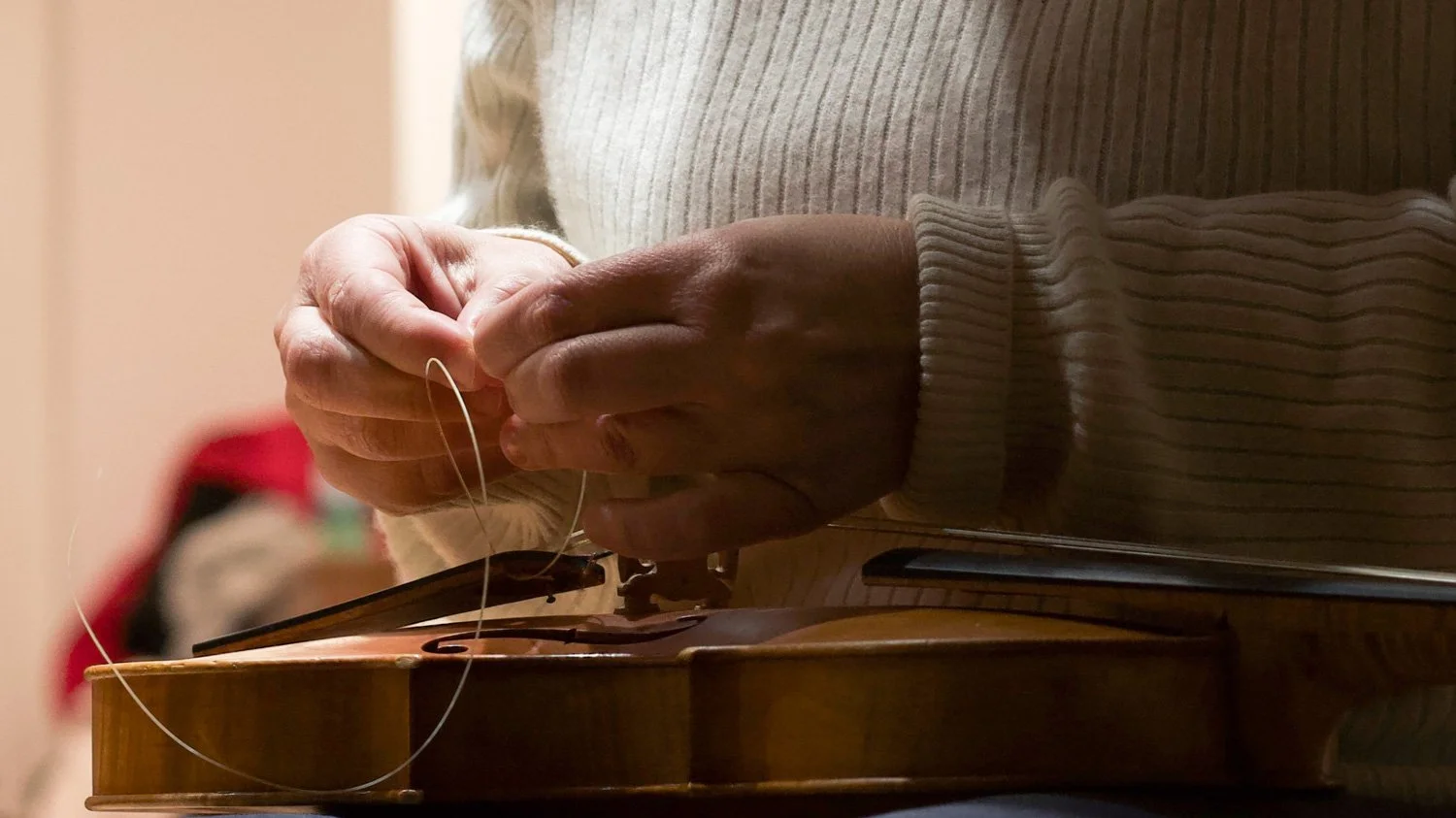
Gut strings for violin are exactly what the name suggests: strings made from the processed intestine of sheep, twisted and dried under tension. They were the standard string material for all bowed instruments from the Renaissance through the eighteenth century and well into the nineteenth – which means that every composer whose music is now considered canonical wrote for an instrument strung with gut. Bach, Handel, Vivaldi, Corelli, Mozart: the sound they were imagining when they wrote down the notes was the sound of gut under the bow.
Modern strings – steel core or synthetic core – arrived considerably later. The shift began during the First World War, when Germany's gut string production was disrupted and sheep intestines were requisitioned for surgical sutures, forcing violinists to adopt steel alternatives. The practical advantages – durability, pitch stability, and resistance to humidity – ensured the change was permanent. They deliver those qualities reliably. What they give up, compared to gut, is harder to describe in advance and immediately recognisable the first time you play on gut: a warmth, a complexity, a responsiveness to small variations in touch and bow speed that steel strings tend to smooth over. The violin starts to feel like a different instrument, more alive under the bow without being any louder.
What Changes in the Sound
The most immediate difference in baroque violin strings compared to modern ones is in the overtone structure. Gut strings produce a richer, darker spectrum of partials – the tone feels warmer and more blended, less brilliant, more complex. The attack is slightly softer and the sustain less uniform, which means that small differences in bow contact point, speed, and pressure become immediately audible in the sound rather than being absorbed by the string's elasticity.
This is what makes gut strings both more demanding and more instructive than steel. The instrument is telling you more. A bow stroke that worked adequately on steel – consistent, efficient, getting through the note – may sound thin or pressured on gut, because gut responds to the quality of the contact rather than just the fact of it. Players who switch to gut strings for violin often describe the first weeks as exposing habits they did not know they had: a slight tension in the bow arm that never registered on steel, a contact point that was slightly too far from the bridge, a vibrato that was always on rather than chosen. The string does not judge these habits. It simply makes them audible.
The string does not judge these habits. It simply makes them audible.
For Historically Informed Performance (HIP), that responsiveness is the point. Historical playing practice – from Geminiani to Leopold Mozart – describes a relationship between player and instrument that assumes this kind of feedback loop. The bow arm is described as speaking, not driving. That description makes immediate physical sense on gut in a way it rarely does on steel.
What Gut Asks of You
Gut strings need more attention than steel. They respond to changes in temperature and humidity, so they go out of tune more readily, particularly in the first days after fitting and whenever the weather turns. Tuning becomes something you do more often and more attentively, and the first weeks with a new set involve a period of stretching in during which the string settles. None of this is difficult once it becomes routine. It is simply a different relationship with the instrument, one that asks you to pay attention to conditions you could previously ignore.
Plain gut, wound gut, and the various gauges each behave slightly differently, and finding what suits your instrument and your playing takes some experimentation. A lower-tension setup speaks more easily and suits a lighter bow arm; a higher-tension one gives more volume and projection at the cost of some responsiveness. Most players arrive at their preferences gradually, by trying a few options over a season rather than deciding all at once.
The maintenance is real, and worth being honest about before you start. Gut strings cost more than most synthetics, they do not last as long, and they will occasionally break at inconvenient moments. What you get in exchange is the sound the repertoire was written for and a level of feedback from the instrument that changes how you play. Whether that trade is worth it depends on what you are after, and it is a personal decision rather than a matter of correctness.
Where to Begin
If you want to try gut without committing your main instrument to a full historical setup, there are gentler ways in. A wound gut D and G paired with your existing strings gives a taste of the warmth without the full adjustment. A second, cheaper violin set up with gut is how many players keep one foot in each world. And if you already own a violin you no longer play, having it strung with gut is a low-stakes way to hear what the fuss is about.
What matters is that the choice stays connected to sound rather than ideology. Gut strings are not a badge of authenticity or a test you pass. They are a tool that makes certain things audible, and the only good reason to use them is that you like what you hear and it helps you play the music you care about. The historical setup is a means, and the sound is the end.
We begin with the strings you have on the instrument right now.
Begin with one lesson.
A full working lesson – we begin with your current setup and your questions, and you leave with something you can use the same day. No commitment beyond that is required.
Book Your First Online Violin LessonBefore you book
Do gut strings sound better than modern strings?
Not better, different. Gut gives a warmer, more complex tone and more feedback about your bow contact, at the cost of stability and durability. Modern strings are more reliable and more powerful. Which you prefer depends on the music you play and the sound you are after.
Can I put gut strings on my modern violin?
Yes. Many players do exactly this to explore the sound without a full historical setup. The bridge and soundpost may benefit from adjustment for the lower tension, but you can start simply by fitting a set and listening.
Are gut strings much harder to maintain?
They need more frequent tuning and respond to temperature and humidity, and they do not last as long as synthetics. It is more attention rather than difficult attention. Most players find it becomes routine within a few weeks.
Do I need gut strings to study Historically Informed Performance?
No. HIP begins with listening and phrasing, not equipment. Gut strings are one way to hear what historical phrasing is asking for, but they are optional. Plenty of students explore HIP entirely on a modern setup.
Which gut strings should I try first?
A wound gut D and G are the gentlest way in, since they hold pitch better than plain gut and pair with your existing strings. From there, a plain gut A and E complete the historical setup once you know you want it.
Continue reading

© 2026 Léna Ruisz. Text and images may not be reproduced without permission.