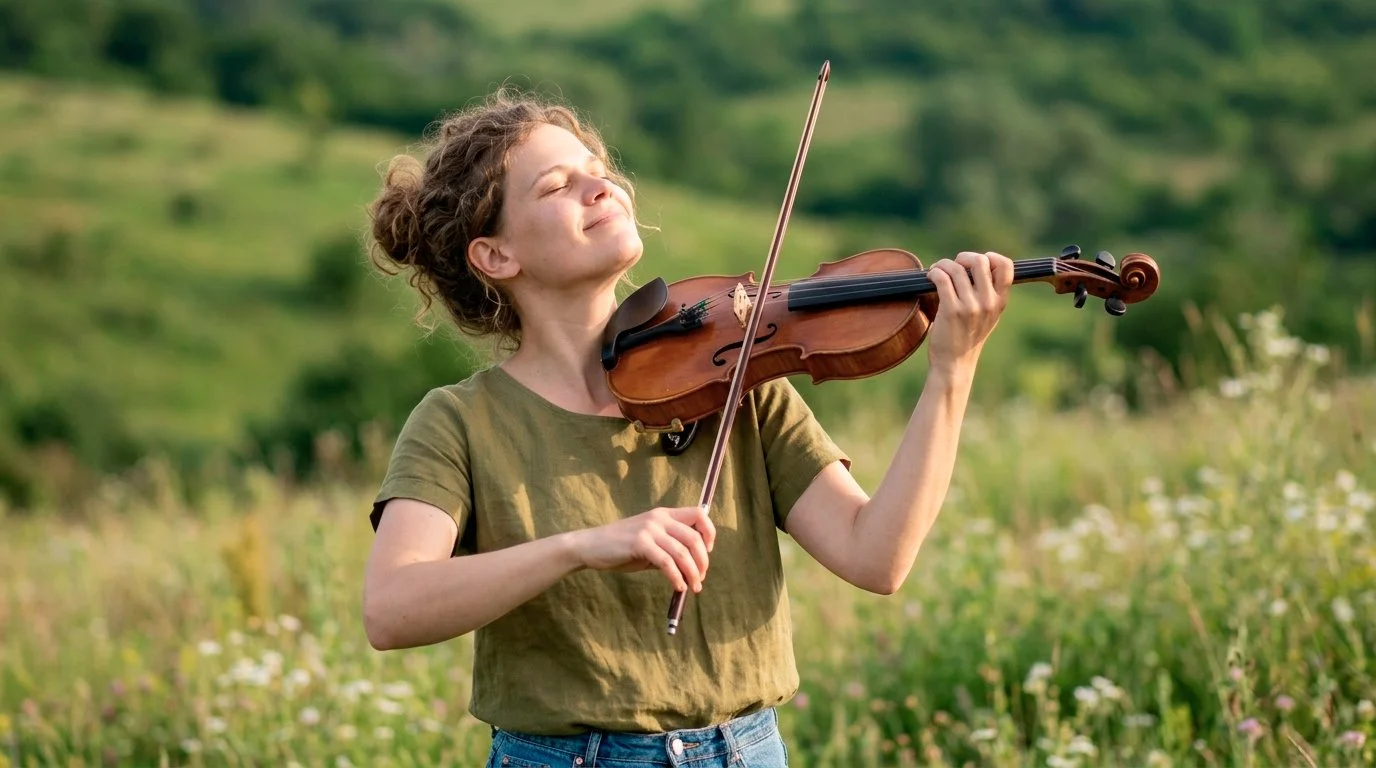
The Baroque Bow: An (Old) New Way to Shape Sound
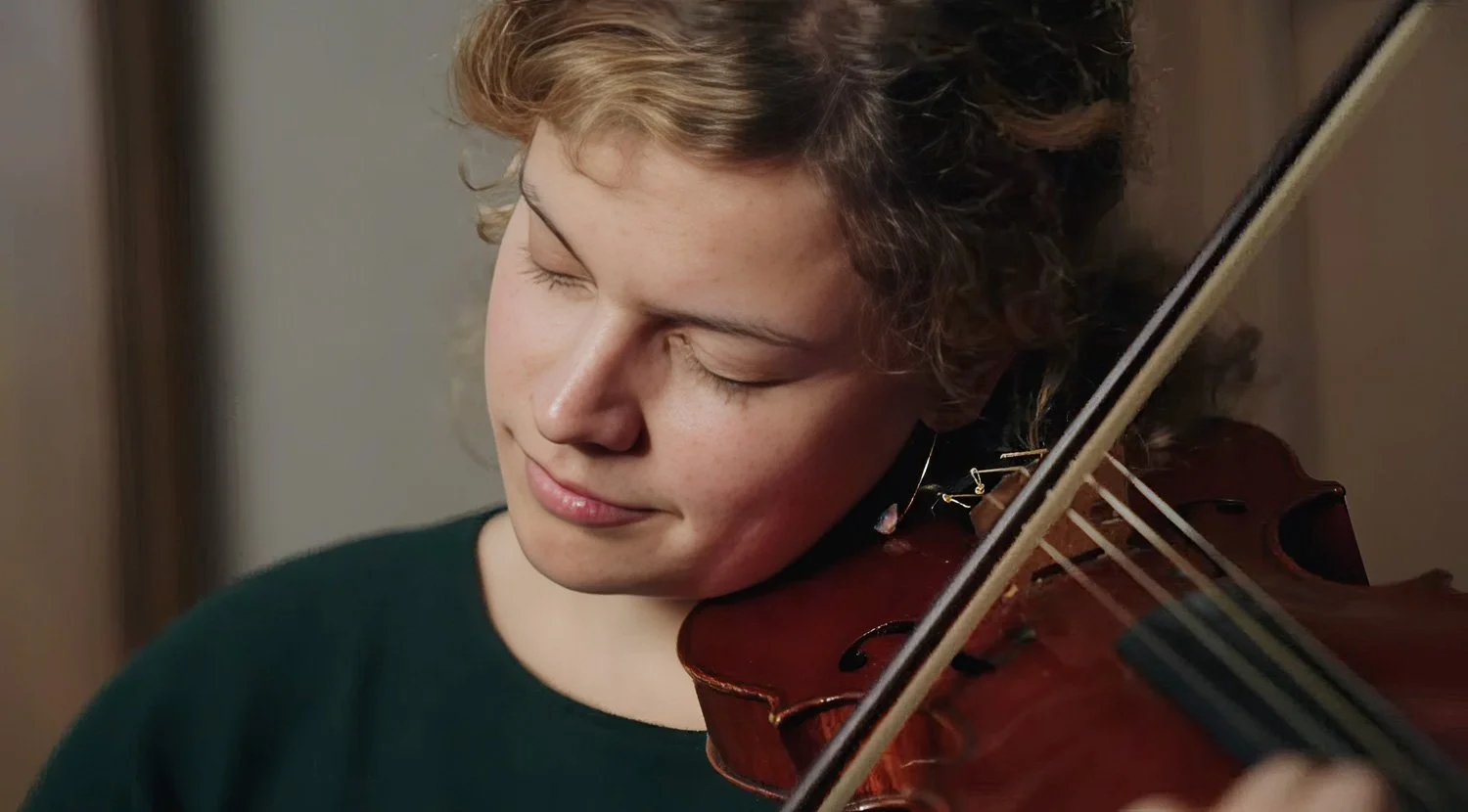
Last reviewed: January 2026
The bow teaches more than it seems to while you are holding it.
A New Way to Shape Sound
The modern violin bow, perfected by François Tourte in the late eighteenth century, is a remarkable instrument in its own right. Its inward curve, high tension, and balanced weight distribution give it power, consistency, and the ability to sustain across a long phrase without variation. These are exactly the qualities that large concert halls and Romantic orchestral writing demanded, and Tourte's bow delivered them.
What it gave up is more difficult to describe – but any violinist who has spent an afternoon with a Baroque bow will have felt the difference. The earlier bow is lighter, more responsive at the tip, and curves outward rather than in. It does not sustain in the same way. What it does instead is breathe: each stroke has a natural rise and fall, a beginning that speaks and an end that releases, a tendency to follow the contour of a musical sentence rather than impose evenness on it. The Historically Informed Performance (HIP) tradition has long understood this as one of the most direct physical demonstrations available of what Baroque musicians meant when they wrote about music as a form of speech.
The Many Shapes of the Baroque Bow
It is tempting to speak of the Baroque bow as though it were a single object with a fixed character, but the historical reality is considerably more varied. Across seventeenth- and eighteenth-century Europe, bow makers worked within regional traditions that produced instruments with distinctly different characters.
Early seventeenth-century bows were short and light, suited to lively dance music and quick rhythmic clarity. Around Arcangelo Corelli's time in Italy in the late 1600s, bows became longer and more lyrical, built for music that wanted to sing as much as it spoke. French bows reflected the elegance and precision of the Versailles court. German bows favoured a broader balance point that gave weight and clarity to contrapuntal ensemble playing. By the mid-eighteenth century these regional traditions had begun to merge, shifting gradually toward the Classical bow that preceded Tourte's innovation.
What all of them shared – and what distinguishes them from the modern bow – is the priority of differentiation over consistency, of intentional variety over sustained evenness. Understanding this cautions against treating the Baroque bow as a single answer. It was a family of tools, each developed in conversation with specific repertoire, specific halls, and specific musical priorities.
What the Bow Actually Does
The Baroque bow is lighter at the tip and heavier near the frog, which means that a natural stroke – one that uses gravity rather than fighting it – will have a stronger beginning and a gentler end. That is the bow making something legible that the modern bow tends to smooth over. A musical sentence has a direction, that direction has a point of arrival, and the arrival implies a release.
A musical sentence has a direction, and that direction has a point of arrival, and that arrival implies a release.
In historical practice, each note's attack and release carry meaning in the same way consonants shape spoken language. The Baroque bow makes this unavoidable. A stroke that begins with weight and releases naturally at the tip produces a different sound from one that begins gently and pushes through to the end. Neither is more correct; both mean something different, and learning to hear that difference is what Baroque playing is built from.
All of it comes back to the same three variables you already work with on a modern bow. Speed, weight and contact point are what the historical bow forces you to choose deliberately rather than by default.
For modern players, working with a Baroque bow for the first time is often a disorienting experience that resolves, over a few sessions, into something more useful: the ability to make choices about how a note begins and ends rather than letting the bow's design make those choices automatically.
A Personal Note
My own first Baroque bow arrived when I was still a young student, not long after the castle course in Hungary where my teacher had first handed me a different violin and a different way of thinking about sound. The initial adjustment was physical before it was musical – the tip behaving differently, the arm wanting to compensate in ways that made everything worse before they made anything better. A few days in, a Corelli phrase that had always felt slightly generic suddenly had weight at the beginning and space at the end, and I understood for the first time what the treatises meant when they described a note as having a consonant and a vowel.
That bow, a copy of a mid-eighteenth-century model, is still in regular use. The move from unfamiliar to indispensable took about two weeks.
What Changes When You Try One
The question I hear most often from modern players is whether trying a Baroque bow will interfere with what they already do. In my experience it rarely does. Players who spend time with historical bow technique often describe a new ease in their modern playing: a lighter contact point, a more differentiated touch, a clearer sense of where a musical sentence ends. Whether the historical work produced that or simply gave them a reason to pay attention is hard to separate, and for practical purposes it does not much matter.
The modern bow permits a kind of muscular override – the ability to sustain through a phrase end, to even out an attack, to smooth over structure that would otherwise need to be made explicit. Spending time with a bow that does not permit this forces the development of articulate choices that the modern bow can then execute more deliberately.
For modern players exploring HIP ideas without committing to a full setup change, the Baroque bow is one of the most instructive experiments available – alongside gut strings and a week spent listening to period recordings. It requires no new instrument, no luthier, and no irreversible decision. It requires only the willingness to let the bow do less and the music do more.
A Journey into Expression
The Baroque bow is not a historical curiosity or an ideological statement. It is a tool that makes certain things audible – about the relationship between the bow and the music it is trying to carry – that are harder to hear any other way. Working with it, even briefly, tends to change what players listen for in their own playing long after they return to their modern instrument.
That change in listening is, in the end, what the work is for.
We begin with whatever bow you currently play.
Begin with one lesson.
A full working lesson – we begin with your current bow and your questions, and you leave with something you can use the same day. No commitment beyond that is required.
Book Your First Online Violin LessonBefore you book
Do I need to buy a Baroque bow to take your lessons?
No. We work with whatever bow you have. The historical ideas about phrasing, weight, and articulation transfer to any bow – modern or otherwise. A Baroque bow is interesting to explore, but it is never a prerequisite.
How is a Baroque bow different to hold from a modern bow?
The main difference is balance – the Baroque bow is lighter at the tip and encourages a more gravity-led stroke. The hold sits slightly lower on the stick. The initial feeling is of less control, which resolves fairly quickly into more expressive range.
Can Baroque bow technique improve my modern bowing?
Often, especially in articulation, phrasing and the willingness to let a note end. Players regularly describe their modern bowing becoming more differentiated after time with Baroque bow principles, even without ever owning a period bow.
What repertoire is the Baroque bow designed for?
Primarily Baroque and early Classical – Bach, Handel, Vivaldi, Corelli, early Mozart. But the expressive vocabulary it develops – speech-like phrasing, articulate attacks, natural releases – is useful in any music that benefits from rhetorical clarity.
Is it difficult to switch between a Baroque and modern bow?
It takes adjustment, but most players adapt quickly. The bigger shift is mental rather than physical – learning to let the bow do more of the work, and to shape with intention rather than sustained pressure.
Continue reading