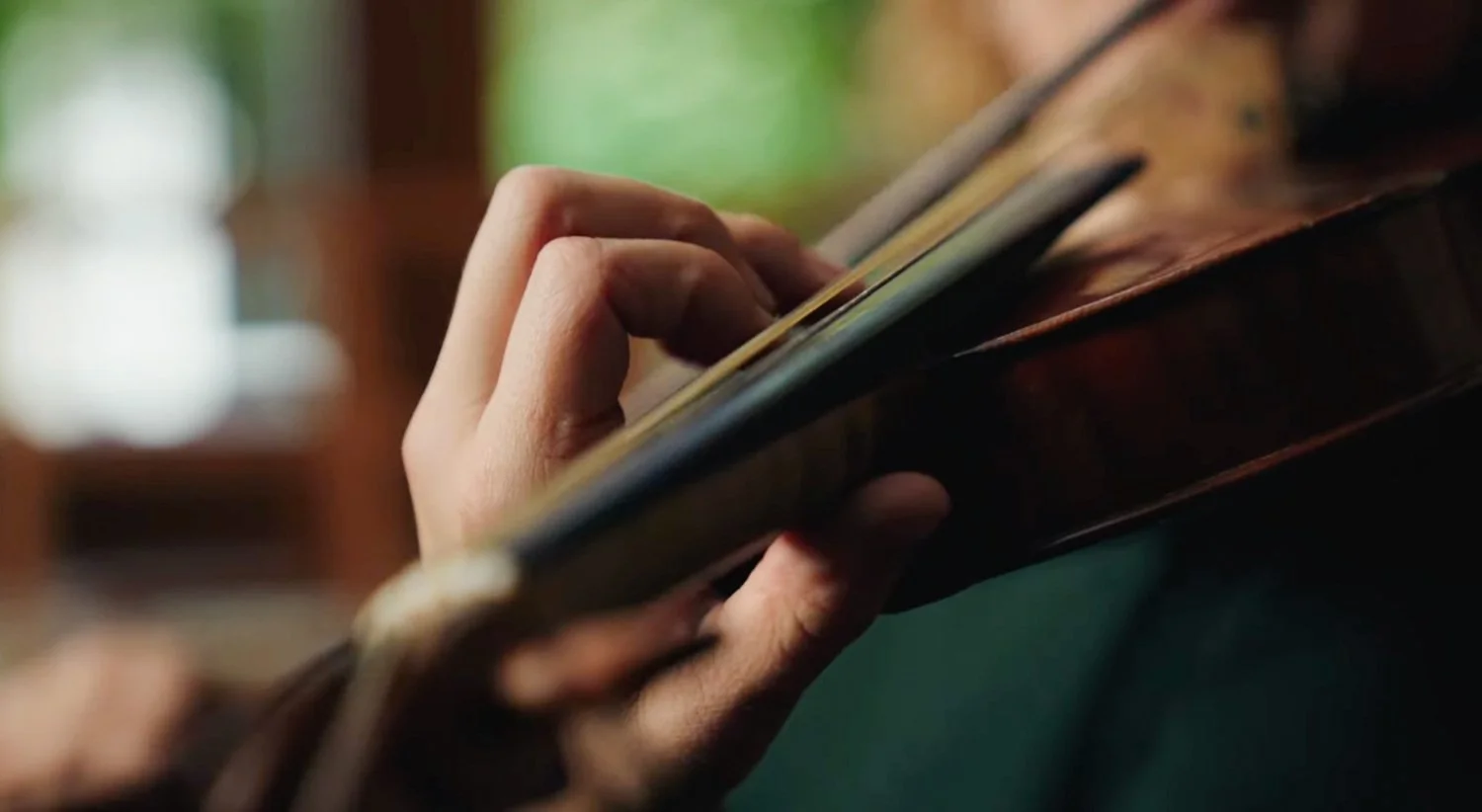
Learning Violin as an Adult: How to Make Music Part of Your Life
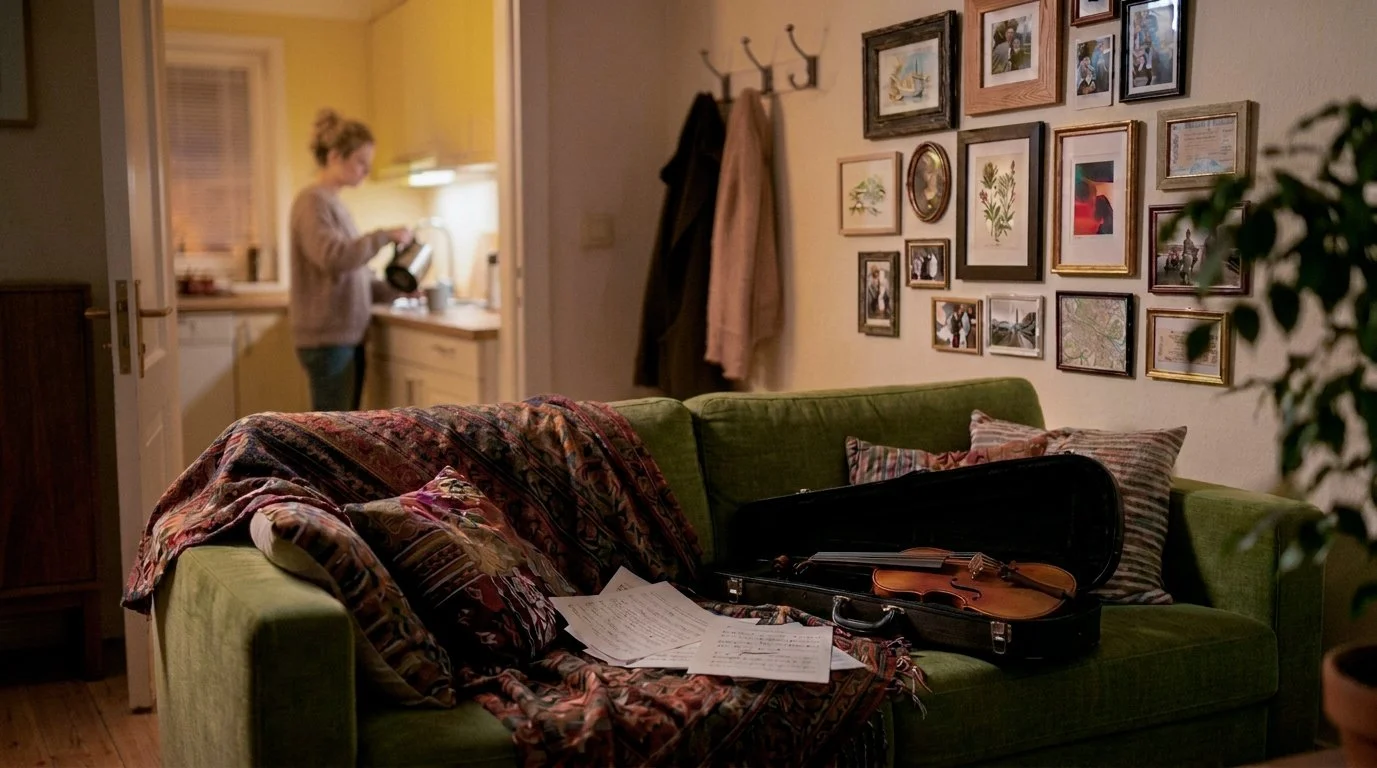
Last reviewed: August 2026
How a small, regular musical practice can give your adult life structure, focus, connection, and something that is genuinely yours.
Finding Space in a Busy World
Adult life is full. Sometimes beautifully full, sometimes overwhelmingly full. Between work, messages, responsibilities, and the occasional late-night doom-scroll, it becomes surprisingly easy to lose the feeling of doing something that actually matters, not useful, not efficient, but genuinely yours.
For some people that thing is running, or painting, or cooking. For many of my adult students, it becomes the violin.
Learning an instrument gives adults something that most activities do not offer: a small, private world that asks for all of you and lets everything else wait. It works as a counterweight to the day rather than an escape from it, a place where attention sharpens because it has to, where thoughts settle because the bow arm requires them to, where you feel present again through the particular kind of focus that music demands. For many of my students, the violin becomes that world: the thing they look forward to in a day that otherwise felt too digital or scattered, the twenty minutes that close one mental register and open another.
What surprises most people is how quickly it compounds. The first weeks feel effortful and a little unfamiliar. Then the sessions start to feel shorter than they are. Then the days without practice start to carry a slight sense of something missing, which turns out to be the sound of a habit forming.
Routine That Feels Good
Music creates structure, but not the kind that punishes you for a difficult week. It asks for discipline while giving back more than it takes, which puts it in a small and valuable category among adult obligations.
A short daily practice becomes a ritual in the original sense: a way of marking time that has meaning rather than just function, a way of closing one part of the day and opening another. What that looks like varies considerably from one person to the next, shaped by work, family, and the hours that are actually free. Some students practise every morning before anyone else is awake, others take twenty minutes after dinner when the house quietens, a few keep a longer session for Sunday mornings with good coffee and no particular schedule. The common thread is intention rather than length or frequency, the decision to treat this time as non-negotiable because it turns out to be worth it.
Adults often describe the early months of a regular practice rhythm as quietly surprising. The progress is smaller than they expected and considerably more satisfying. If there are stretches where it seems to stall, there are usually good reasons the improvement gets harder to feel rather than an actual plateau. The practice stops feeling like something they have to remember to do because it has become the thing they come back to. And once it does, the question quietly shifts from whether you will practise to what the practice itself should hold. Because the violin rewards attention rather than force, it becomes a place where the mind can rest and the hands can work, a combination that turns out to be restorative in a way that most other activities do not quite manage.
When Solitude Meets Connection
Practising is solitary, but the solitude has a direction, and for most adult learners it points eventually toward playing with someone else, which changes the quality of the practice that precedes it in ways that are difficult to anticipate in advance.
Chamber music is the obvious destination, but the path there has pleasures of its own. Duo lessons, where another instrument gives yours context it could not find alone. Sight-reading evenings where the page is unfamiliar and the concentration in the room is almost physical. The particular quality of attention that comes from listening to another player's phrasing and adjusting your own without a word being said. And, more often than people expect, the warmth of simply playing with someone else, whether that is a friend, a duo, a small ensemble, an informal sight-reading evening, or two instruments in two different rooms held together by nothing more than shared attention.
There is nothing like the moment when two or more players lock into the same sound. It is connection in its most lovely form: no small talk, just shared timing, shared attention, and shared breath.
One of my students, a GP who came back to the violin in his early fifties after a twenty-year break, described his first online chamber session as the moment he remembered why he had started in the first place. The technique had come back in lessons. What came back in that session was something harder to name: the sense that the music was going somewhere, and that someone else was going with him. Adults often rediscover something here that most other activities simply do not provide, a focused, creative engagement that is also, in the best possible way, deeply social.
It is worth keeping this in mind when you think about the purpose of practice, because the thirty minutes alone with the violin is not the end point but the preparation, and knowing what you are preparing for changes the quality of the solitude itself.
A World That Grows With You
Learning an instrument in adulthood is not about speed, and it was never meant to be. Your sound matures as you do, and the awareness you bring to a phrase at forty-five is different from the awareness available at seventeen, because you have lived longer with music, with difficulty, and with the particular satisfaction of understanding something slowly and finding that it stays. That accumulation is the material you work with.
And whether you want to explore Baroque repertoire, modern pieces, or a bit of both, the process stays the same: sound becomes a companion, practice becomes a ritual, and music becomes one of the most meaningful parts of the week.
The practice that felt effortful in the first months starts to feel natural. Students regularly describe hearing music differently after a few months of regular playing, noticing more in recordings, following a phrase further, understanding why one performance moves them and another leaves them cold, and that shift in listening extends well beyond the practice room, into concerts, into daily life, into the way music sits with you when you are not playing it at all. That same sharpening of the ear is, in time, what lets you hear what is actually happening in your own playing.
What the violin gives back over time is proportion.
Your violin is waiting. We begin with your sound, your schedule, and whatever brought you back.
Begin with one lesson.
A full working lesson – we begin with your sound, your schedule, and the practice you want to build. You leave with something you can use the same day. No commitment beyond that is required.
Book Your First Online Violin LessonBefore you book
Is it too late to learn violin as an adult?
No, and the assumption behind the question is worth examining. Adults learn structured material about as well as younger learners, and what they bring beyond that is substantial: musical experience, the patience to work on one thing properly, and a reason for being there that a child rarely has. Progress arrives in a different shape, smaller and steadier, and most adults find it more satisfying rather than less.
Can I learn violin if I only have a small amount of time?
Yes, and the amount matters less than most people assume. What predicts progress is how the time is used rather than how much of it there is, so twenty focused minutes spent on one specific thing will do more than an hour of running pieces through. A short session that happens most days beats a long one that keeps getting postponed until the weekend.
Can I make real progress without practising every day?
Yes. Consistency helps more than daily attendance, and a rhythm you can actually keep through a difficult week is worth more than an ambitious schedule that collapses. Four sessions a week that happen will outperform seven that are planned. What matters is that the practice returns often enough to stay warm, and that each session has something specific to work on.
How can I fit violin into a busy adult life?
By attaching it to something already fixed in your day rather than looking for a free slot, since free slots tend not to appear. Students who keep a practice going usually have it anchored somewhere: before anyone else is awake, after dinner when the house quietens, a longer session on a Sunday morning. What that looks like for your particular week is one of the things we tend to work out together in a first lesson.
What if I have stopped playing before and want to come back?
That is one of the most common places to start, and it is a different situation from beginning fresh. Ability returns faster than people expect, because much of what you learned is still there. What is worth attention is that you rebuild from memory, and memory holds the shape of how you played without the small corrections a teacher used to supply. Bringing that to a first lesson is exactly the right use of it.
Continue reading